
School Bus Safety: A Practical Compliance Checklist for Transport In-charges
Vehicle documents, driver checks, on-board safety, trip attendance and parent communication — a practical checklist every school transport office can follow.
By SSMS Team
Also available in:हिन्दीગુજરાતીमराठीਪੰਜਾਬੀবাংলাଓଡ଼ିଆதமிழ்తెలుగుಕನ್ನಡമലയാളംاردوঅসমীয়াनेपालीसंस्कृतम्कोंकणीमैथिलीडोगरीबड़ोমৈতৈলোন্ᱥᱟᱱᱛᱟᱲᱤسنڌيکٲشُرالعربيةFrançaisEspañolDeutschPortuguêsItalianoNederlandsРусскийTürkçeفارسیKiswahiliBahasa IndonesiaBahasa MelayuไทยTiếng Việtසිංහල简体中文日本語한국어
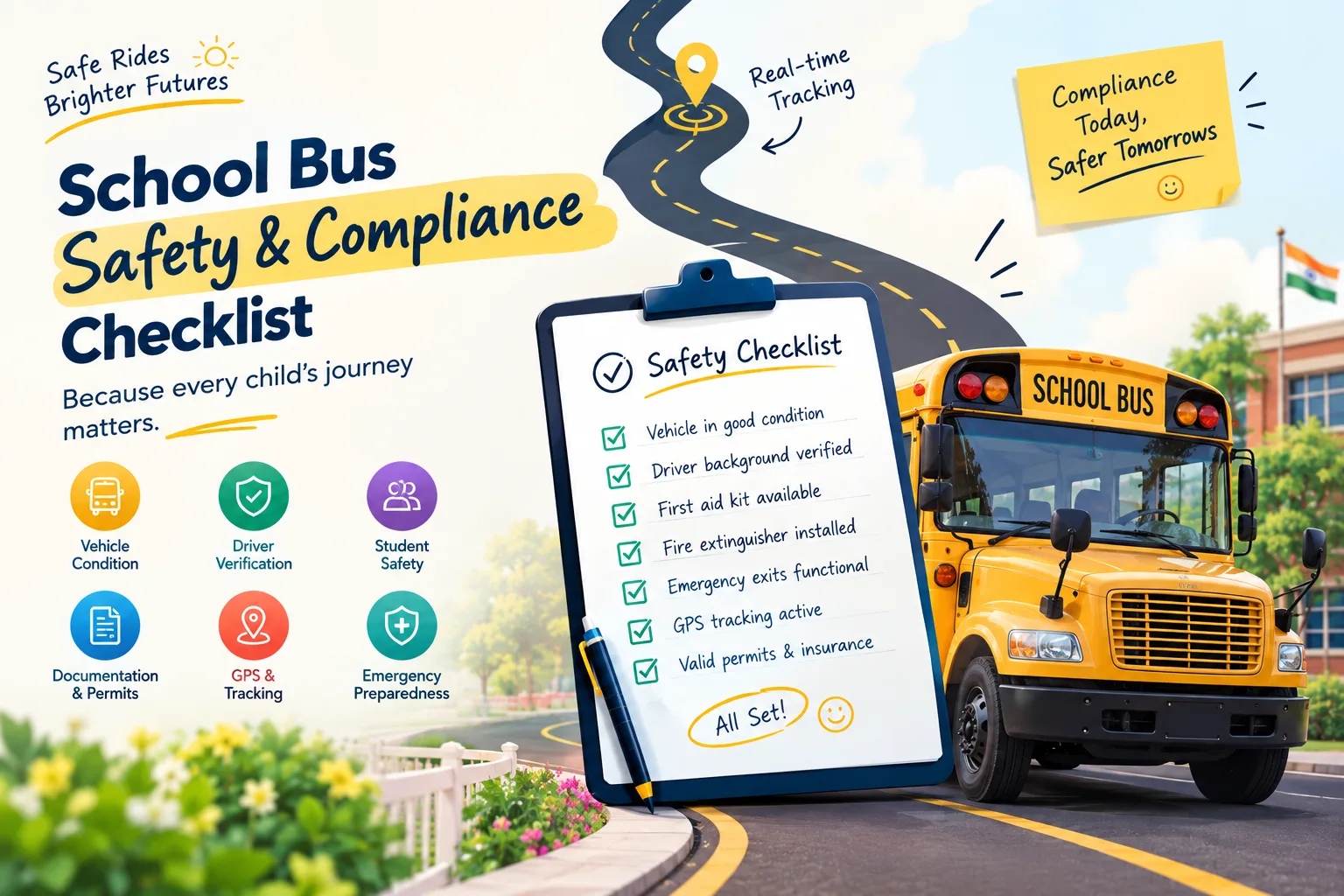
School transport is where parents' anxiety is highest and where a single lapse can have the most serious consequences. Boards and state transport departments set safety requirements; this checklist turns them into routines a transport office can follow every day. Always check your board's and state's current guidelines for the exact requirements.
Vehicle documents (track expiry dates)
Registration certificate (RC)
Insurance
Fitness certificate
Permit
Pollution under control (PUC)
Speed governor certificate
On-board safety equipment
First-aid kit, checked and restocked
Fire extinguisher, within its validity
CCTV and GPS device working
Emergency exits clear, windows with grills as required
School name and contact number displayed
Driver and attendant checks
Valid driving licence of the right class
Police verification
Medical fitness and eyesight check
Training records
A trained attendant (female attendant where required) on every trip
Every trip
Pre-trip safety checklist completed
Each child marked boarded and dropped at the correct stop
Exceptions (child not boarded, not collected) escalated immediately
Odometer, fuel and incidents logged
Parent communication
Boarded, reached school and dropped notifications
Delay alerts with the reason
Clear process for temporary stop changes and one-time pick-ups
Make lapses impossible, not just unlikely
The most effective control is to make the system refuse to assign a vehicle or driver whose document has lapsed. That's how SSMS Transport works: reminders before expiry, and a hard block after.